Microfibre weaves, and which job each one is for
Plush, waffle, flat and edgeless are not marketing words — they are different tools. The short field guide.
1 minute
Plush (terry) is the thick, high-pile weave with long dense loops, usually 400 GSM and up. The pile holds product and keeps grit away from the surface, which is why detailers use it for buffing wax and for the final pass on paint. Slightly damp, it is also the best duster in the house.
Waffle weave has built-in pockets and is usually thinner, 300–400 GSM. The structure gives it extra surface area, so it drinks water extremely fast without streaking — the cloth for drying dishes, cars and draining boards.
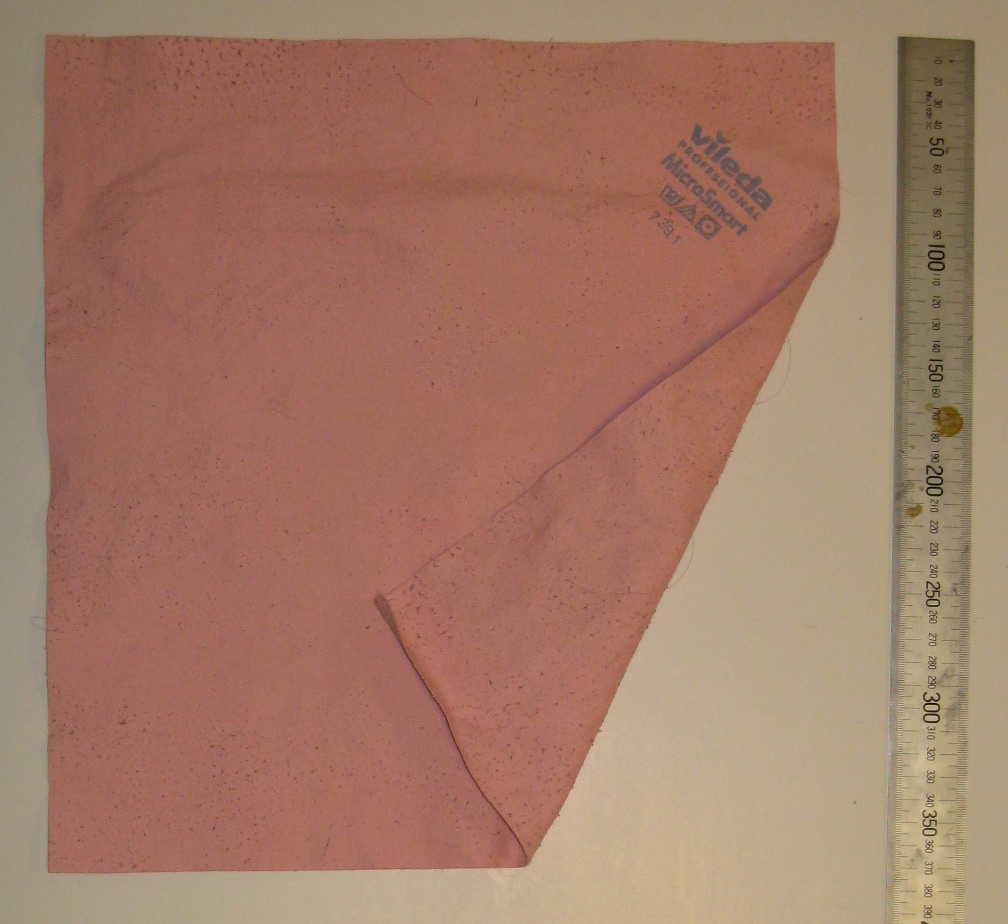
Flat or suede weave is tight, thin and nearly pile-free. It leaves the least lint of any weave, which makes it the cloth for glass, mirrors, screens and optics.
Edgeless describes the border, not the weave: laser- or ultrasonically-cut edges with no stitching. On scratch-sensitive surfaces — car paint, gloss furniture — the absence of a stitched hem is the point.
For the household: flat weave for windows and mirrors, waffle for drying and spills, plush for dusting and everything all-purpose.